
Patient-facing medical and dental information has to preserve the source meaning while speaking to readers who may not use clinical terminology every day. An appointment preparation sheet, a dental care leaflet, or a patient support guide can be technically faithful yet difficult to follow. Translation buyers therefore need to define both what the document says and how patients will encounter and use it.
Terralíngua translates medical and dental patient information, works with native-speaking linguists whose subject knowledge fits the assignment, and provides multilingual document formatting. These services can support a coordinated language and production project. The buyer’s role is to supply the approved content, clarify the audience, and establish who can authorize changes affecting clinical meaning.
Define the Patient’s Reading Context
Start with the situation rather than a language name. Will someone read the document at home, review it with a clinician, or open it on a phone before an appointment? Is it intended for the patient, a caregiver, or both? A leaflet that accompanies a conversation may need different navigation from a document the reader must consult independently later.
- Which country, region, and language variant are intended?
- What does the reader already know about the condition, procedure, or dental treatment?
- What question should this material answer, and what action does the approved source ask the reader to take?
- Will readers have another person available to explain the information?
- What reading, visual, or digital-access needs should inform the deliverable?
- Which terms will patients also encounter on packaging, forms, or in conversations with the care team?
CDC’s Clear Communication Index begins by establishing the audience, communication objective, main message, and relevant health literacy skills. Those questions are useful when preparing a translation brief as well. Do not infer a reader’s needs solely from nationality or education; provide the audience information your organization actually has gathered and identify any assumptions that need confirmation.
CDC: Using the Clear Communication Index
Set Expectations before Translation
Discuss with content-owners on which text changes are linguistic to be handled by the translator, and which need technical or content-owner approval. A translator may need to reorganize a sentence to make its relationships clear in the target language. Adding a country specific explanation, changing an instruction from the source, removing a qualification, or replacing a medical term can involve a different level of decision. Define an escalation route so those questions do not become unapproved editorial choices.
For approved or controlled material, identify the required wording and structure that must be retained. If the source itself is unclear, the translation team should raise a question with the designated owner. A translator should not decide what incomplete instruction means. Resolve the source issue, record the authorized answer, and determine whether other language versions require the same correction.
The source package should include editable files, a reference PDF, the approved revision list, relevant artwork, and any existing translation reference that are still valid. Flag comments, tracked changes, and draft passages so they are not mistaken for approved text. Remove any unnecessary information or files. Agree on confidentiality and file-transfer arrangements before sharing sensitive material.
Simplify without Affecting Meaning
Clearer language can use familiar expressions, specific subjects, and less complicated sentence structures. However, shorter wording is not automatically more accurate or easy to understand. Review whether each change preserves the intended party, what actions are involved, under which conditions, and with what limitations. These relationships matter as much as the translation of individual medical terms.
For example, compare an instruction regarding a confirmed appointment with a shorter version when an appointment is requested. Both sound straightforward, but the second has a different triggering condition. A language reviewer should detect that difference. The example illustrates wording control, not medical advice.
Similarly, preserve distinctions between possible and expected events, advice and requirements, and temporary and continuing restrictions. Keep an exception attached to the action it modifies. If a long sentence becomes two shorter sentences, repeat the necessary subject rather than leaving an unclear “it “or “they”. Do not add text reflecting reassurance, urgency, or certainty that the approved source does not contain.
CDC’s guidance on developing health materials emphasizes that making information easier to use should not change the science in the messaging. For a multilingual project, the practical objective is a clear expression of the authorized message. The client’s medical reviewer remains responsible for decisions about that message, including any proposed explanation that goes beyond the source.
CDC: Developing accurate, accessible, and actionable health materials
Choose Terms Patients Recognize
A technical term may need to remain because patients will see it elsewhere. The task is then to decide whether an approved plain-language explanation should accompany the technical term. Determine which terms appear in treatment plans, appointment letters, product instructions, or the patient portal. Removing technical or scientific wording can make the translated guide harder to connect with the patient’s other information.
Provide preferred terms with their intended meanings, not just two columns of words. Does an approved term apply to every audience or only to professional documents? Is a familiar alternative acceptable for patients or will it conflict with other materials? Must the technical name appear at first mention? Who approves a definition when the existing glossary does not include one? Answering these questions helps avoid inconsistent decisions across the same leaflet.
Native-language adaptation considers natural phrasing, forms of address, and regional usage in the intended setting. It should not be focused on stereotypes about how speakers of a language communicate. Ask reviewers to explain whether a proposed change corrects meaning, improves audience fit, or reflects a personal preference. Consider first completing a patient-facing sample to make those discussions more concrete.
A US patient may read Spanish-language information while using an English-language portal or visiting a department identified by its English name. Confirm how the document should refer to those visible names. A common approach is to retain the displayed name with an approved translated explanation, rather than replacing it with localized wording the reader cannot find. Translation into another language does not necessarily always mean adapting the material for another country.
Protect Numbers, Timing, and References
Review the numerical values, ranges, units, dates, and time relationships that may have another format that is more familiar to the reader. Distinguish a local display convention from a change to the underlying information. A date may need a less ambiguous presentation; a measurement must not be converted or rounded merely because another convention is common in the target country. Discuss your position on factual or preferential changes to the authorized reviewer.
Check numbers in context, including their table headings and footnotes. Preserve whether a statement concerns one visit, a recurring interval, or an entire period. If information is repeated in a sidebar, confirm that it remains consistent with the body. Contact details and references also need owner confirmation, so the translated document directs readers to the intended resource.
Where the source describes the likelihood of a condition, preserve the population and period to which the statement applies. A percentage without its original context can communicate a different message, even when the number is copied correctly. Do not substitute informal frequency words for a numerical expression without approval. Ask the medical owner to resolve an unclear comparison rather than making the translation sound more definite than the evidence presented.
Review the Format Patients Receive
Multilingual document formatting is part of making the approved text usable. The translated file may contain longer headings, different line breaks, or a different writing direction. Decide how much flexibility exists in page count and layout before production. A fixed panel should not force the consideration of removing content or changing to an unreadably small font.
For a printed leaflet, review a folded proof at the intended size. Check what readers see first, which panels follow, and whether a heading and its explanation should remain together. A flat production sheet can look orderly while the folded sequence could be confusing. Ask the production team to show how the translated content will appear after trimming and folding.
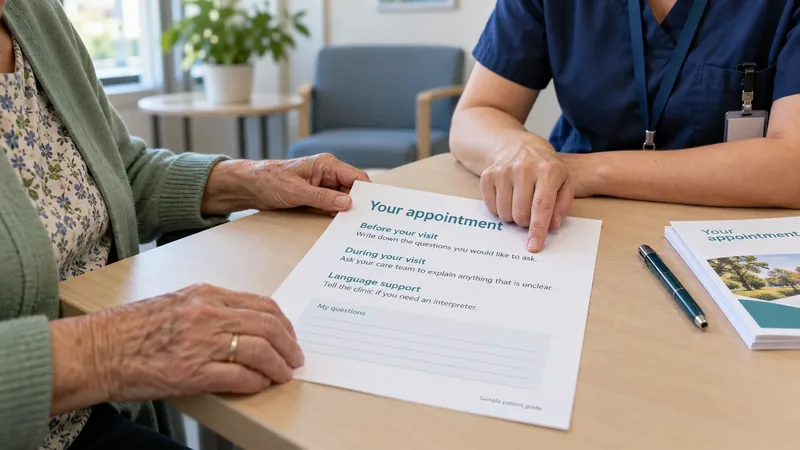
For a digital document, inspect the actual export rather than only the editable file. Confirm that navigation, links, and language-specific character function as intended. If the delivery needs accessibility features such as tagged reading order or alternative text, define the production and validation scope. A PDF that looks acceptable is not automatically an accessible PDF.
Identify text embedded in pictures and supply the editable artwork where available. Captions, arrows, and references should still identify the correct content after translation. A language change does not authorize mirroring a medical illustration or changing the order of a visual sequence. Any change affecting the information conveyed needs review by the appropriate content owner.
See Terralíngua’s multilingual document formatting services
Separate Language Review Needs from Patient Testing
Specify a bilingual review against the approved source, an audience-focused review of the target wording, and a check of the finished layout as needed. These activities answer different questions. The first checks correspondence with the source; the second considers how the language reads for the intended audience; the third examines how the text and presentation work together.
A readability formula can flag features of a text, but its score does not demonstrate patient understanding. The AHRQ (Agency for Healthcare Research and Quality) cautions against treating grade-level scores as an overall assessment of comprehension or usability. If a project requests a reading-level target, identify the language, assessment method, and acceptance process. Do not apply an English scoring result to every translated version or remove content to fit in a layout space.
AHRQ: Use caution with readability formulas
Testing with intended readers is a separate activity from translation review. If your organization requires it, establish who will conduct it, how findings will be approved, and when approved changes can be implemented. Do not assume that comprehension testing, clinical validation, or certified readability is included in a translation quotation. Any such requirement needs separate confirmation of scope and availability.
Give the client’s medical, dental, or regulatory reviewers a clear decision role. They should resolve questions about medical content, approved statements, and required permissions before release. Appoint one person to consolidate comments across reviewers. Translation and formatting support the communication process, but they do not by themselves establish clinical safety, regulatory approval, or compliance.
Determine Decision Sequencing
Consider a fictional dental patient information booklet that uses a technical abbreviation on its opening page and then has the explanation several panels later. The translator recognizes that a direct abbreviation substitution would leave a similar obstacle in the target language. The question is not simply which letters to use, but whether the reader can connect the abbreviation with the intended concept.
The language team proposes to the client retaining the authorized term and placing an approved explanation at first mention. The designated dental reviewer confirms the explanation’s accuracy and whether the change is permitted. The formatter then checks that the added wording fits without separating the heading from its paragraph. A final language check confirms that the production adjustment has not removed any part of the explanation.
This sequence produces a traceable editorial decision. It does not prove that every patient will understand the booklet. If reader testing is required, that remains a separately planned step. Keeping those distinctions clear helps buyers commission the right work while avoiding unsupported claims about the finished material.
Agree on Acceptance, Delivery, and Updates
Name the completed files and quality checks expected at handover. Depending on the project, the package may include editable translations, formatted PDFs, print files, and a record of resolved language questions. Confirm each item in the scope. The following acceptance points are procurement recommendations, not a promise that every assignment includes the same deliverables.
- The translation corresponds to the identified approved source revision.
- Required conditions, limitations, terminology, and numerical information have been checked.
- Questions affecting meaning have been resolved by the responsible owner.
- Accepted review comments appear correctly in the final files.
- The agreed print or digital presentation checks are complete.
- Any separately required testing or approval has an identified owner and status.
Allow time for source clarification, client comments, layout adjustments, and review of the final export. A late change to one sentence can affect several panels or language versions. When updating the material, supply a change record and the previously accepted source and related translations. Check repeated passages and affected files rather than replacing one isolated sentence and assuming the rest remains aligned. Ensure the translation memory is updated by the provider with any review comments. Making changes without the knowledge of your translation provider updating the translation memory will affect future versions.
Plan where accepted files will replace earlier versions: printed stock, downloadable leaflets, portal attachments, and related patient support materials may have different owners. Give each owner a unique file identifier for review comments and language assignment approvals. Retain the approved editable package so the next update does not begin with an uncontrolled PDF. Distribution decisions remain with the client, but identifying them early helps define the language and production handover.
Frequently Asked Questions
Should We Remove All Medical Terms?
No. Some terms help patients recognize information they encounter elsewhere. Identify which names must remain and which can be explained or replaced. Any added definition should be accurate, appropriate to the audience, and approved through the project’s content-review process.
Must Every Language Use the Same Page Count?
Only if that is an agreed upon production constraint, and it may require layout changes. Assess a representative sample before committing to it. Preserve complete content and legibility; do not treat smaller type fonts or deleted wording as the default solution to localized text expansion.
Can We Start with an Existing Patient Translation?
Yes, subject to assessment. Supply the matching source, its revision, and the history of any changes. Explain whether the existing translation was approved and for which audience. Reviewing an unmatched or outdated translation can require more work than its word count suggests.
Prepare a Patient-Information Translation Brief
Terralíngua’s medical and dental services cover patient information, including client-approved explanations and preparation instructions, with native-language expertise and multilingual formatting available to support the project. Share representative files, target languages and regions, reading context, approved terminology, required outputs, and the deadline. Identify restrictions on adaptation modifications, and the reviewers who can answer clinical questions. These inputs allow the language and production work to be assessed together.
Explore Terralíngua’s medical and dental translation services