
A factory work instruction must connect words with a specific task, component, and production setting. When it is translated, that connection depends on more than accurate sentences. The reader must still recognize the part in the photograph, understand the stated units, and follow the approved sequence. A translation can sound fluent while referring to the wrong illustration or an outdated workstation configuration.
For teams commissioning manufacturing translation, start with an approved source package and a clear description of where the materials will be used. Terralíngua provides technical translation and multilingual desktop publishing to support specialized content and its presentation across languages. These capabilities are relevant when work instructions, visual references, and training materials need to remain consistent across markets.
The purpose of this work is to support clear communication. Translation does not validate a production process, establish that equipment is safe, or replace operator training. Those responsibilities remain with the plant’s authorized process, quality, and safety reviewers. A good brief makes that boundary explicit while giving the language team the information needed to translate the material accurately.
Start with the Approved Work Instruction
Identify the document owner and the revision approved for the intended production area. Provide the document number, applicable equipment or product variant, and any linked instructions. If the source contains handwritten amendments or supervisor comments, distinguish approved changes from suggestions. The translator should not determine which version describes the authorized process.
Include editable files along with a reference showing the approved layout. A PDF can demonstrate how the page should look, but editable text and artwork can make language integration more straightforward. Identify missing source files before requesting a quotation so any reconstruction can be assessed separately. A scanned instruction should not be treated as equivalent to a complete editable package.
Record the scope of local variation. Two plants may use similar equipment but different fixtures, inspection records, or material names. Confirm whether the assignment involves one approved procedure for several language groups at the same site or separate approved versions for different sites. Language changes should not conceal an unreviewed change to the underlying process.
Define the Readers and Point of Use
Specify the languages and regional variants required by the production team. Describe the readers’ technical familiarity and whether they already use established local terms for the equipment. Do not infer language proficiency from nationality alone. Ask the content owner to define the intended audience and the level of explanation appropriate for the approved instruction.
Explain how the instructions will be accessed: as printed sheets at a workstation, laminated cards, a digital document, or training handouts. State the page size or display conditions and whether several languages need to appear together. These decisions affect layout and review. A bilingual reference document may require a different layout and review approach than a short instruction intended for use during a task.
Consider compliance with relevant local or federal laws. For example, the UK Health and Safety Executive (HSE) emphasizes that procedures should be usable, fit for purpose, and supported by appropriate training and other controls. It also cautions against relying on operating procedures as the sole defense against human error. For a localization project, this reinforces a practical distinction: making information understandable is one part of a wider system. Translation does not replace the plant’s controls, supervision, training, or other safety arrangements. (Source: https://www.hse.gov.uk/humanfactors/topics/procedures.htm)
HSE guidance on procedure design and use
Provide Site Terminology and Physical References
Prepare a terminology list that connects each important term to its meaning at the site. Include component names, fixtures, tools, product variants, and quality terms. A photograph or drawing reference can be more useful than an isolated word. Identify abbreviations and clarify whether a local nickname is approved terminology or simply a term workers commonly use. Work with your translation partner to localize the list and define the review team to confirm site relevance. Ensure its creation and revision maintenance will be included in the scope of work. Terralíngua includes a terminology glossary and style guide with client confirmation review as part of our process.
Establish “Do Not Translate” (DNT) guidelines in the style guide. Distinguish terms that can be translated from identifiers that must remain unchanged. Part numbers, document references, and equipment tags may connect the instructions to other controlled information, so specify their treatment rather than leaving the decision to individual translators. If a physical control remains labeled in another language, agree how the translated instruction will help the reader identify it.
Consider usage ambiguity and whether Simplified Technical English (STE) is appropriate for the source material. For example, in a fictional assembly instruction, “housing” might refer to the component being assembled or the enclosure surrounding a mechanism. A photograph and an approved definition can resolve the ambiguity. Replacing the term throughout the document without checking its different uses could introduce an error into an otherwise consistent translation. Terminology review requires context, not just a preferred-word list.
Assign an internal technical contact who can answer terminology questions relevant to the work site. Record those decisions so they can be reused in related work instructions and training materials. Where reviewers disagree, the source owner should resolve the underlying concept before the language team standardizes the wording. Unresolved technical differences should not create variations between language versions.
Review Actions, Conditions, and Sequence Together
Define reviewer responsibilities. Ask reviewers to check the meaning of each instruction, including the action, the object, and any condition that governs when it applies. A sentence beginning with “if” is not interchangeable with an unconditional step. Likewise, a requirement to verify a condition before continuing should not be moved into a general note elsewhere on the page.
Preserve the approved order and the relationships between steps, sub steps, and exceptions. If a translator identifies an ambiguous reference such as “repeat the previous operation,” the language provider should follow an established quality-control process to raise the query and obtain confirmation. Clarification should be requested rather than allowing missing process details to be added or the procedure to be independently reorganized simply to make it read smoothly. Ensure your provider will follow a certified process such as ISO 17100 or ISO 18587.
Watch for negative instructions and limiting words. “Only,” “before,” “unless” and “do not” can determine the scope of an action. Review instructions in context with the associated warning or condition. A subject matter expert should approve safety-sensitive wording and any proposed clarification before release, rather than assuming fluent language establishes technical correctness. Where appropriate, consider Simplified Technical English (STE) or another applicable technical writing standard to reduce ambiguity in the source content.
Use stable step references during review. A comment tied only to a paragraph number can become difficult to follow with pagination changes. Identify the document revision and relevant step or section to retain the connection with its visual reference. This allows corrections to be checked against both the text and layout without guessing which instruction the reviewer meant.
Consider Numbers, Units and Symbols
Treat quantities and units as technical content. Provide any approved converted values and define which conventions should be localized. Decimal separators, spacing, and unit names may require adjustment, but that does not authorize changing a value or converting units. Any requested conversion should be specified and approved separately by the technical owner responsible, including the required precision and rounding. Confirm whether local requirements call for unit conversion or other localization and establish the applicable style guidelines before translation begins.
The Bureau International des Poids et Mesures (BIPM), the international organization responsible for coordinating the International System of Units (SI), provides conventions in its SI Brochure for writing quantities and unit symbols, including the use of decimal markers. These conventions help separate localized presentation from the underlying quantity. In factory work instruction, however, the review must also consider the actual equipment display, site specifications, and approved source. A typographically correct change can still conflict with what an operator sees.
BIPM guidance on SI units and their presentation
Include ranges, tolerances, table headings, and footnotes in the comparison. Check that each value remains attached to the correct component or condition after layout changes. Review symbols and prefixes carefully rather than treating them as decorative characters. If a number in a photograph differs from the text, ask the document owner to resolve the source discrepancy before the translation is approved.
Visual Accuracy in Work-Instruction Localization
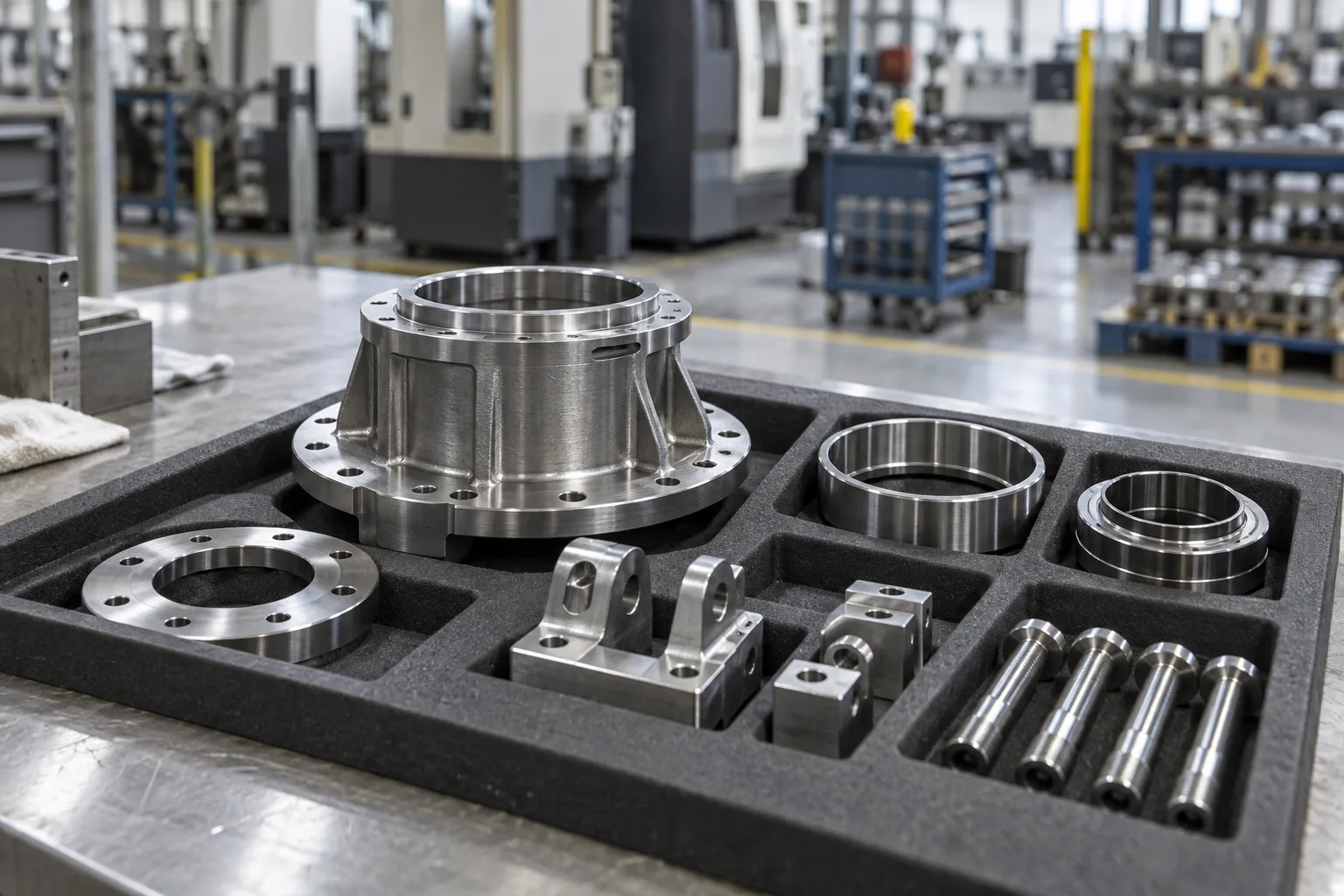
Provide images, screenshots, diagrams, and editable callouts where available. Identify the equipment version shown and explain the purpose of each image. A visual intended to identify a component serves a different purpose from one showing an acceptable result. The language team needs that context to translate captions and references accurately without implying more than the image establishes.
Do not assume that a visual reference makes the wording unnecessary. Similar parts can be difficult to distinguish, and a close crop may remove the feature that establishes orientation. Have the site reviewer confirm that the translated reference points to the intended item. If the source image is obsolete, replacing it is a source-content decision, not a translation correction.
Keep callout identifiers aligned between the text and artwork. An arrow or reference letter should remain connected to the correct item after translated text expands or the image is repositioned. Where labels are embedded in a flat image, identify any editing required. Shortening a technical label simply to avoid editing the artwork may compromise the meaning of the instruction. Consider the interface and screen shots to ensure the text matches the user experience.
Preserve Concepts in the Multilingual Layout
Define what must remain together on the page: a step and its photograph, a condition and its action, or a table and its explanatory note. Translation can change line lengths and page breaks. Layout review should therefore consider the instruction, not just whether all translated words are present somewhere in the document.
Choose a translation partner with experience adapting multilingual layouts and ask for a representative sample. Avoid solving every space problem by reducing the font size. Agree on acceptable layout adjustments, page dimensions, and type styles before production. For bilingual sheets, establish a consistent reading order and clear separation between languages. The site owner should assess the final format under its intended viewing conditions rather than relying only on a desktop preview.
Terralíngua’s Desktop Publishing (DTP) services support multilingual layout, character display, and visual integration across a range of file formats and languages. These services are relevant when translated work instructions need to fit their approved delivery format. Specify the files and required outputs when requesting a quotation, including whether editable files, print-ready PDFs, or other formats are needed. Confirm the scope rather than assuming that every publishing task is included.
Explore Terralíngua’s Multilingual Desktop Publishing Services
Connect Work Instructions with Training Materials
Related materials should use consistent terminology and reflect the same approved process, particularly where safety-sensitive information is involved. Identify training materials that refer to the same process, such as presentation slides, quick-reference sheets, and course content. Share approved terminology and revision information across those materials. Work instructions and a training handout should not use different names for the same component unless the distinction is intentional and explained.
Training may provide background that a concise station instruction does not include. Do not add that background to the work instruction without approval, and do not remove essential conditions on the assumption that they are addressed in training. Ask the training owner and process owner to agree on the relationship between the materials before finalizing language changes.
If training adaptation is part of the project, include the editable source files and required delivery formats in the brief. Terralíngua provides localization of training materials and multilingual desktop publishing, but the specific scope should be confirmed for each project. The client remains responsible for determining training needs and evaluating operator competence. Translating or adapting a training aid does not demonstrate that a person can safely or competently perform the task.
Assign Review Decisions and Acceptance Criteria
Name a person to consolidate feedback and identify the specialists responsible for process meaning, quality requirements, and safety-sensitive content. Language review can assess accuracy and naturalness, while technical review should confirm that the wording describes the approved task. Neither review should be assumed to have occurred simply because a file has reached its final layout.
Ask reviewers to compare the translated text with the approved source and relevant visuals. Record questions against the document revision and relevant step or section. Distinguish a translation error from a proposed source improvement or terminology preference. A source change may need to propagate to every language, while a language-specific correction may not affect the underlying instruction. Provide reviewers with the approved source and translated versions, along with the glossary and style guide, to support a consistent review. Provide a defined reviewer scope with required checks.
- The document identity and revision match the approved source.
- Actions, conditions, sequence, and exceptions retain their intended meaning.
- Component names agree with approved site terminology and identifiers.
- Values, units, and table relationships have been checked.
- Visual references and callouts identify the intended items.
- Layout keeps related information together and readable.
- Authorized reviewers have resolved open issues before release.
Where the site includes intended users in a controlled document review, capture questions about wording and navigation through the approved review process. This feedback can reveal a term that is unfamiliar locally or a reference that is difficult to locate. It does not authorize an operator or translator to change the procedure independently or replace formal process validation.
Prepare the Quotation Package and Future Updates
Provide the translation partner with the final approved source content before requesting pricing whenever possible. Identify any unresolved source ambiguities and establish who is responsible for resolving them. Define the review roles and owner-approval responsibilities and agree on the expected schedule. For example, an instruction may refer to a component that is missing from the visual reference. Identify who is authorized to resolve the discrepancy before translation proceeds. Once the owner resolves it, update the source and provide the corrected files. For future revisions, ensure the provider receives the approved changes, and that the document version is updated so the clarification remains traceable.
Send representative instructions before requesting a production estimate. Include a text-heavy page, a visual procedure, and a table if those formats occur in the project. Specify the number of languages, source formats, and required delivery dates. Missing artwork, unresolved terminology, and staggered reviewer availability can affect the effort as much as the visible word count. When preparing your content package for either budgeting or exact pricing, ensure it is comprehensively gathered for an accurate evaluation.
- Approved editable work instructions and reference PDFs
- Document revisions, applicable sites, and equipment variants
- Target languages, reader profiles, and delivery conditions
- Site terminology, identifiers, and approved visual assets
- Related training materials included in scope
- Required output formats, review owners, and deadline
For later updates, identify what changed and which related materials are affected. Maintain a record linking each source revision to the corresponding translated versions. When a component image or procedure step changes, review its captions and cross-references as well. A small source edit can create a larger inconsistency if only the altered sentence is sent for translation.
The site’s document-control process should govern the release and replacement of superseded versions. Include language versions in that process so an updated source is not paired with an older translation at the workstation. Agree on the handoff record and file-naming conventions with the provider, while keeping operational distribution and revision update responsibilities explicit.
Retain approved language decisions alongside the document history. A future reviewer may reasonably question an unfamiliar site term without knowing why it was selected. A brief definition, physical reference, and approval record can prevent repeated debate. If the equipment or process changes, revisit the decision rather than automatically carrying the old wording forward. Reuse is helpful only when the previous translation still describes the current approved instruction.
Frequently Asked Questions
Can the Same Translation Be Used at Different Plants?
Only after the responsible owners confirm that it describes the applicable approved instruction at each site. Similar equipment does not establish that fixtures, terminology, inspection records or process steps are identical. Identify local differences before translation and maintain separate versions where needed, while reusing language that remains valid across sites. For example the Spanish speakers in Europe can have differing site nomenclature than the Spanish speakers in Mexico.
Will Numbers and Units Be Converted During Translation?
Conversion should not be assumed. Specify which presentation conventions should change, and which values, units and identifiers must remain as supplied. Any requested conversion, including precision and rounding, needs approval from the technical manager responsible. The translated instruction must also remain consistent with the equipment displays and approved site references.
Is a Scanned Work Instruction Enough to Obtain a Quote?
A legible scan can support an initial assessment but identify whether editable text and artwork are available. Reconstruction, unclear characters and embedded labels may add time and cost to the scope of work. Include the approved revision and representative pages with tables or diagrams so the provider can distinguish translation effort from document recreation and layout.
Should Translated Instructions Keep the Same Page Layout?
Preserving an exact same page layout across languages is not an inherent requirement and would be a planning decision to make before translation. Preserve the relationships that make the instruction usable, such as a step beside its photograph or a condition next to its action. Identical page breaks may not be practical in every language. Agree on permitted layout changes and output formats, then have the site reviewer check readability at the intended point of use.
Assessing Your Manufacturing Translation Project
Terralíngua’s technical translation services cover manufacturing and industrial processes, including automation, quality control, and supply chain management. Combined with multilingual layout and training-content adaptation, these capabilities provide a relevant basis for translating and localizing factory work instructions. They do not imply that Terralíngua validates manufacturing processes or approves site operating conditions.
Explore Terralíngua’s Manufacturing and Technical Translation Services
To request an assessment, provide the approved work instructions, site terminology, visual references, target languages, and required formats. Include the intended production setting, review responsibilities, and deadline. These details help define the language and localization work needed to keep instructions, physical references, and training materials aligned.